

- October 15, 2026
- Comments (0)
Contents
ToggleHelicopter Ambulance Patient Transfer
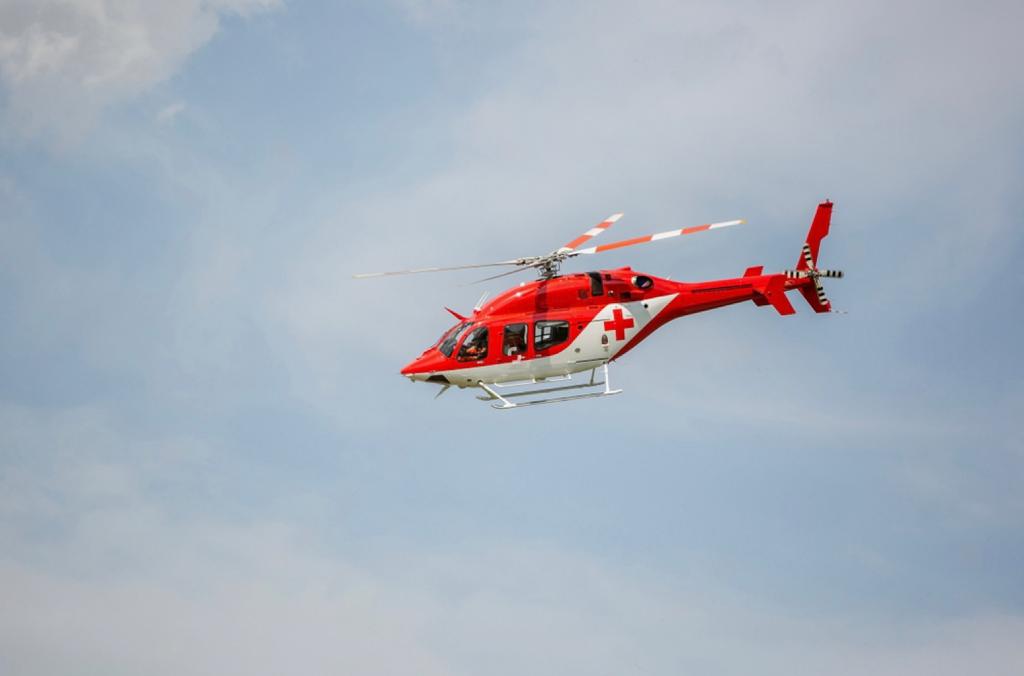
A helicopter ambulance is one of the air transport options that may be assessed for a patient transfer. Suitability is not determined only by distance or the absence of an airport. The patient’s condition, support requirements, route, landing sites, weather and operational availability need to be considered together. Tell MEK JET the sending hospital and intended receiving facility when making an enquiry.
A check for your particular itinerary
Do not treat the hospital name and a usable helicopter landing site as interchangeable. Without a direct facility connection, a ground ambulance and handover leg may be required. Compare a helicopter with a fixed-wing option using the complete transfer plan rather than airborne time alone.
When might helicopter transport be considered?
A helicopter option may be assessed where the ground journey is lengthy or an appropriate air connection could contribute to the overall transfer plan. It should not be assumed that every patient or route is suitable. The relevant medical teams’ assessment and operational feasibility both require confirmation.
For a longer-distance or international journey, a fixed-wing air ambulance may be another option. The transport choice should be based on the whole journey and medical requirements.
Why does the landing site matter?
A hospital heliport does not automatically mean every flight can use it. Availability, operating conditions and relevant confirmations must be assessed. A helicopter cannot be promised to land at any open area or directly beside a hospital.
Where a direct hospital connection is unavailable, a ground ambulance may be needed between the approved landing point and hospital. The timing, team arrangements and handover point for that leg should be specified in the quote. Compare the complete journey rather than airborne time alone.
Information to prepare
- The patient’s current hospital and city.
- The receiving hospital and relevant department’s contact details.
- A recent medical summary and further information requested for assessment.
- The requested transfer time and any flexibility.
- Mobility, stretcher and current medical support requirements.
- Companion requests and ground ambulance connections.
Hospital acceptance and the handover plan should be coordinated alongside the flight. The medical transfer documents guide and medical team roles guide support preparation.
Weather and schedule
Weather and operating conditions can change the plan. A requested time is not a confirmed departure. Discuss waiting time, schedule changes and alternative-transfer arrangements in advance. Decisions about the patient’s care remain with the relevant medical teams.
How is a helicopter ambulance quote prepared?
The route, helicopter positioning, flight and waiting time, medical support, landing-site services and ground connections are assessed together. Request a case-specific quotation rather than assuming a fixed rate. Confirm the start and end points, inclusions, companion capacity and payment conditions in writing.
Frequently asked questions
Does a helicopter remove the need for ground ambulances?
Not always. Connections between the landing points and hospitals need separate assessment.
Can a companion travel?
This is confirmed against cabin capacity and the medical personnel and equipment requirements.
Can the flight operate in any conditions?
No. A programme cannot be finalized without assessing weather and operational conditions.
Discuss your helicopter ambulance request with MEK JET. Telephone: +90 541 570 99 11.